Friday, April 3, 2020

COVID-19: 50 Suggestions for Reopening the Economy in a Responsible Way


COVID-19 poses a very serious threat: Many more people could die, either from COVID-19, the disease caused by the coronavirus, or from other conditions that could not be properly treated because hospitals are running at or over capacity due to the influx of COVID-19 patients. 

The current strategy that many Western countries follow to deal with the problem is to try to ‘flatten the curve’. In practice flattening the curve requires extreme forms of social distancing and shutting down large sectors of the economy. This too, however, has severe negative consequences: Tens of millions of people could lose their jobs, businesses will go under, retirement accounts lose value etc. All these developments are likely to cause significant health, social, psychological and institutional problems.
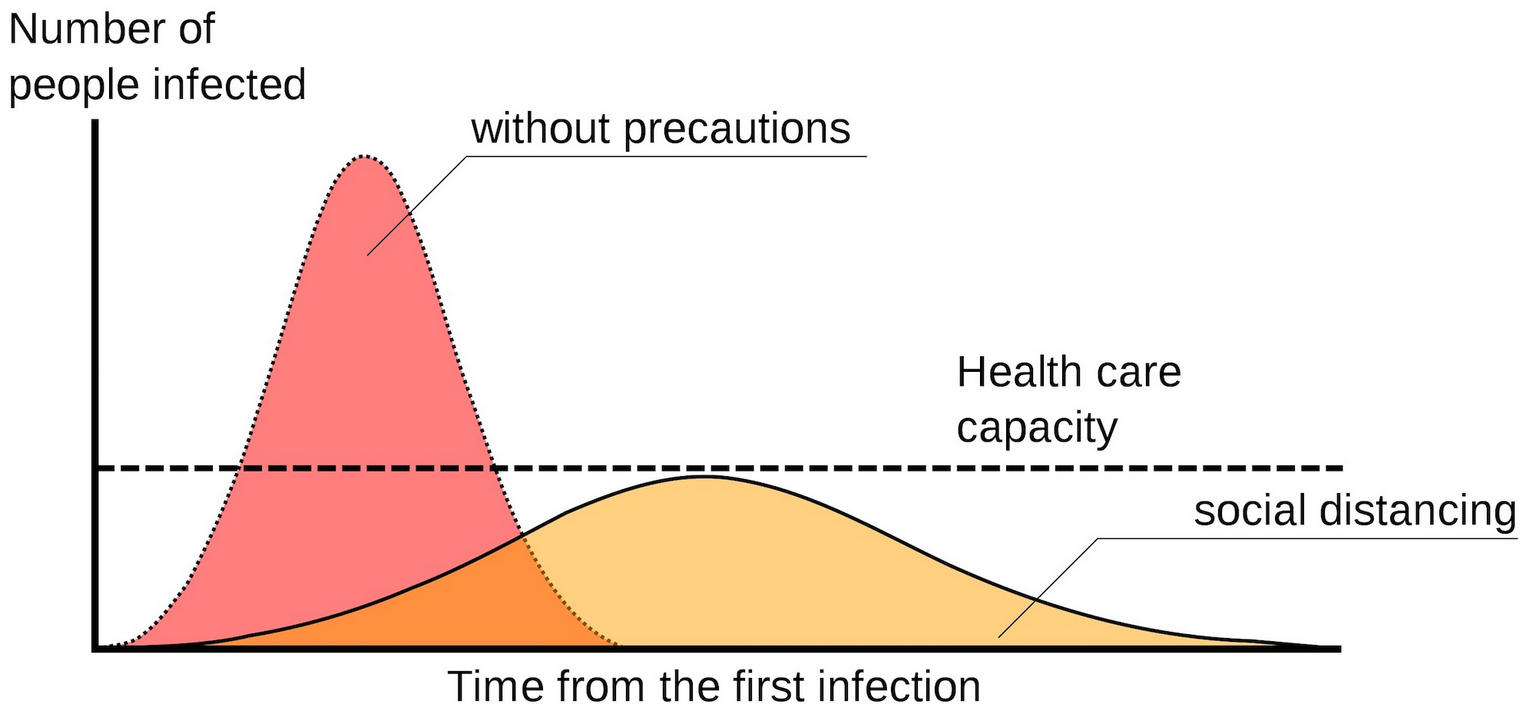

At this point it is not obvious that the ‘flatten the curve’ strategy is effective. Judging from results in South Korea, Japan, Taiwan, Singapore, Sweden and other countries, shutting down the economy may not be necessary to deal with the virus in a harm-minimizing way. And looking at countries such as Italy, on lockdown since March 9, it may not even be sufficient.

In addition, when it comes to reducing mortality rates the strategy has severe limits: Unless a vaccine and/or effective treatment is found in record time, a lockdown is not going to stop the virus. It will just distribute the deaths from the virus over a longer period of time. The lockdown is only intended to prevent the additional deaths that could result from hospitals being overloaded.

At the same time, this strategy is likely to cause a significant number of additional deaths due to the before-mentioned severe economic, social and psychological consequences of the lockdown itself. 

But what is the alternative? Are there effective ways to contain the pandemic or at least reduce the number of deaths as much as possible without imposing a lockdown?

First note that shutting down large parts of the economy is incredibly costly, almost unfathomably so. A lockdown means that large parts of the economy simply stop producing. That means billions of dollars worth of goods and services that could have been created are now not being created. Moreover, the stimulus packages intended to enrich politically connected corporations at the expense of everybody else cushion the blow of shutting down the economy are incredibly expensive too, and it will quickly become simply impossible to compensate people for lost wages and revenue if the lockdown continues for much longer.


This means that it is worthwhile to spend considerable sums of money on measures that could help to end the lockdown sooner rather than later.

With this in mind, below are some ideas for how to responsibly end the lockdown and reopen public life. This document will continue to be updated.

[Please note that this document is written by somebody with no expertise in any of the relevant areas. It is purely intended as a starting point for much needed discussion and research. Corrections, suggestions etc are very welcome at @koenswinkels or kmswinkels@gmail.com. Please share and feel free to use any content, with or without attribution. 
For an alternative take on the COVID-19 crisis, see this interview with prof Knut Wittkowski who argues not just that the lockdown cure is worse than the disease but that the disease is not as big a problem as commonly thought and that a lockdown makes the disease itself worse.] 

Monday, March 23, 2020

Thirteen Ways In Which The COVID-19 Threat May be Inflated

COVID-19 is a very serious problem that should be taken very seriously by both government and the public, but there are ways in which we may be getting an inflated sense of the threat:


Saturday, March 21, 2020

Covidonomics: What Will the COVID-19 Crisis Do to Our Political Economy? (updated)

The COVID-19 crisis is fueling a race to find solutions for the problem while also shutting down large parts of the economy and giving governments enormous economic powers. Except for wartime mobilization, this situation is unprecedented. In this article I discuss sixteen major potential negative consequences of the crisis.

Monday, March 16, 2020

Populism for Peace

Voters generally don't care or know much about the horrors US foreign policy inflicts on so many people around the world. But to get rid off the foreign policy establishment responsible for those horrors you would need a populist revolt. So the situation seems hopeless.

In this article published on The Libertarian Institute's site I argue that there is hope after all: A populist pro-peace movement could end the Empire without even trying.


Thursday, January 2, 2020

Why Did North Korea Develop Nuclear Weapons?

Scott Horton gives a very brief history of what happened (57m38s):
It was all George [W.] Bush's fault. [He] probably deliberately provoked them into doing that.
First, [the US] abnegated the Agreed Framework deal, then they announced a whole new round of sanctions, then they announced the Proliferation Security Initiative which said that we can seize all your boats on the high seas and do whatever we want with them [...] and then they announced the Nuclear Posture Review that said we just might attack you with nuclear weapons.

And only then did the North Koreans withdraw from their end of the Agreed Framework, announce they were withdrawing from the Non-Proliferation Treaty like in the deal it says you have to announce 6 months beforehand, and only then did they withdraw from the treaty, kick the IAEA out and start making nukes.

And i guess the thinking [in DC] - if you can call it thinking - was, don't worry, we'll be done in Baghdad and we’ll be ready to go to Pyongyang before they get their first nuke together, except that Oops instead we just essentially handed them an arsenal of nuclear weapons when they were perfectly happy within the Non-Proliferation Treaty as a threshold state under the Agreed Framework deal which America had never even lived up to our side of.

It just took Bush repudiating it and threatening them with an H-bomb first strike to make them withdraw from their end.

Thursday, December 19, 2019

Good Protests, Bad Protests


All over the world people have been protesting their governments. Their reasons vary from economic grievances (eg high gas prices, corruption) to political concerns (eg resistance against centralization or oppression or foreign influences; political freedoms) to religious causes (eg sectarian conflict, religious freedoms).

Some protests are violent while others are peaceful or even festive. Some governments tolerate the protests while others respond with violence. Some protests are purely grassroots while others seem to be fueled by outside parties.

Given all this diversity, how do we know which of these protests are good protests from the perspective of the US foreign policy establishment? And hence, which protests will receive positive, negative or no coverage in US media?

The rule of thumb seems to be that protests are deemed good when they target (and preferably threaten) the continued existence or influence of governments that the US foreign policy establishment regards as insufficiently subservient to its interests.

And protests are bad when they target governments that are friendly to the US.

With some protests, to be sure, it may not yet be clear what the effects will be or who the main driving forces behind them are. And in some cases the protests may be relatively neutral with respect to US interests.

But in many cases it is pretty obvious whether protests threaten or support the interests of the US foreign policy establishment. These are listed below in an arguably simplistic but perhaps nonetheless useful overview:

Monday, November 25, 2019

List of Commentators Who Acknowledge They Were Wrong About Russiagate

There was no evidence of any collusion between the Russian government and the Trump campaign. This was the conclusion of the Mueller report that was made public last April. The conclusion was subsequently confirmed by Robert Mueller himself in his testimony before Congress in late July.

Of course, if you had predicted in 2017 or even in 2018 that Mueller would find no evidence of collusion many hundreds or thousands of journalists, pundits, politicians, podcasters, TV hosts and other commentators would have thought you were a fool or worse.

Now that they've had several months to reflect it may be instructive to see which of the people who were at some point so confident that there was Trump-Russia collusion now publicly acknowledge that they jumped the gun.

A while ago I published a list of commentators and media organizations who were rationally skeptical throughout Russiagate, who always insisted that the publicly available evidence for collusion simply wasn't there. They deserve praise for getting it right.

But because intellectual honesty matters we should also praise the people who once believed in collusion but who now acknowledge that they were wrong.

You can find their names on the list below. Suggestions for additions are welcome.


Acknowledged They Were Wrong about Russiagate 
  1. Michael Isikoff
  2. Bobby Chesney (55:00)
  3. Stewart Baker (57:15)
  4. James A. Gagliano

This list will be updated with more names when needed.

Saturday, November 9, 2019

Bill Browder's Sergei Magnitsky Story Is a Lie


Bill Browder tells the story of how his whistle blower lawyer, Sergei Magnitsky, was murdered in a Russian prison to cover up a massive fraud he had discovered. This story has been a key element in the current anti-Russia narrative that is so pervasive in Western European and North American politics.

It is also completely false.


Tuesday, July 16, 2019

For How Long Can a World with Nuclear Weapons Avoid Nuclear Annihilation?

We live in a world with nuclear weapons. We know there are enough nukes to blow up the world many times over. And we know that the more time passes the more opportunities there will have been for nuclear war to break out.

But how much time will have to pass for this possibility of nuclear war to become a near certainty?

Let's make four assumptions:
  1. Only 10 governments have nuclear weapons at any given time.
  2. A government exists for four years on average.
  3. Only .1% (1 out of 1,000) of governments with nuclear weapons are stupid or suicidal/homicidal enough to accidentally or intentionally start a nuclear war.
  4. Nuclear war will escalate into nuclear annihilation (either directly through the blasts or as an indirect effect in the form of fallout and nuclear winter).

Monday, April 8, 2019

Three Books on the History and Nature of Russophobia Help Explain Russiagate

What is Russophobia?

Russophobia is several things. Wikipedia says:
a diverse spectrum of negative feelings, dislikes, fears, aversion, derision and/or prejudice of Russia, Russians or Russian culture. A wide variety of mass culture clichés about Russia and Russians exists in the Western world. Many of these stereotypes were originally developed during the Cold War, and were primarily used as elements of political war against the Soviet Union. Some of these prejudices are still observed in the discussions of the relations with Russia. (wikipedia)
But as Guy Mettan explains in his historical study, Creating Russophobia: From the Great Religious Schism to Anti-Putin Hysteria, Russophobia is not just the manifestation of a feeling:
It is first of all the expression of a power balance, of a relation of power. It is not only a passive judgment. It is not just a mass of clichés and prejudices. It is also, and first of all, an active bias, adopted with the intention to harm or at least to reduce the other in relation to one’s self. In this sense Russophobia is also a racism: the purpose is to diminish the other with a view to better dominate.

And this is what makes Russophobia a phenomenon specific to the West. It proceeds with the same categories Edward Said identified for orientalism: exaggeration of the difference, affirmation of the superiority of the West and recourse to stereotyped analytical grids. The ultimate strategy of the Russophobic discourse is to provide a full-fledged, infinitely adjustable subject, sufficiently sophisticated for academics in charge of theorizing about Russia yet popular with journalists eager to put that within everyone’s reach.


Tuesday, March 26, 2019

Russiagate Skeptics

Below a list of journalists, commentators etc & media organizations who never succumbed to Russiagate --the conspiracy theory that the Trump campaign conspired with the Russian government to hack and distribute the DNC & Podesta emails-- and who remained rationally skeptical throughout.

Wednesday, July 18, 2018

People Who Have Not Succumbed to Anti-Russia Hysteria

"Russia hacked the DNC! Russia attacked American democracy! A new Pearl Harbor! A cyber 9-11!"

"And Trump is Putin's poodle. He's a traitor. Our government is controlled by a foreign enemy!"
This kind of rhetoric is absurd and exceedingly dangerous. It is also very common and completely mainstream. See for example here and here.

What makes this rhetoric so dangerous is that it increases tensions between the two nuclear superpowers. Needlessly. And with increased tensions comes a increased threat of war --nuclear war-- either intentional or accidental. And nuclear war is bad, really bad.

Tuesday, February 7, 2017

Obama Spokespersons Embarrassing Themselves

In the spirit of people (rightly) mocking Trump press secretary Sean Spicer's blatantly false claims, here are some other examples of blatantly false or ridiculous claims by Obama's spokespersons, typically about matters much more serious than crowd sizes:

Saturday, February 4, 2017

28 Obama Foreign Policy Horrors (and three genuine achievements)

With Donald Trump in the White House it makes sense to worry about the direction US foreign policy is going in. But such understandable concerns about the future may lead us to forget just how destructive the previous president’s foreign policy has been.

The Obama administration bombed people in 8 countries, enforced crippling sanctions that caused widespread suffering in already poor regions, played an active role in 2 coups d'état, allied the US with neo-Nazis in Ukraine and Al Qaeda (Al Qaeda!) in Syria, and played dangerous war games with nuclear Russia.

Below is a non-exhaustive list of Obama's foreign policy horrors. Lest we forget.